Cologne Day
An afternoon and evening in Cologne
We're heading to Cologne together: a city of Roman streets, a cathedral that took centuries to build, riverside walks and neighbourhoods that still feel very much alive.
We're going to Cologne
It's a simple city day out. We're travelling together from Kamp-Lintfort, arriving in Cologne in the afternoon and exploring the city on foot. There is no Study & Chill ticket or registration for this trip.
We'll have time for the old town, the Rhine and some independent exploring. You're also welcome to travel there separately and meet us in Cologne. The return is flexible; we'll share any group return plans separately.
A city that has always looked towards the Rhine
Cologne is one of Germany's largest cities today, but the river explains why a city grew here in the first place. The Rhine connected the area to settlements upstream and downstream, carried goods and people, and gave this stretch of river enormous strategic value.
For almost two thousand years, Cologne has kept reinventing itself around that same waterway: first as a Roman provincial capital, then as a powerful medieval trading city, later as an industrial and railway hub, and now as a place of culture, universities and everyday city life.
As we walk, look at the relationship between the cathedral, the old streets, the bridges and the river. They are different chapters of the same story.
Before Cologne was Köln
Roman Cologne was called Colonia Claudia Ara Agrippinensium, often shortened to CCAA. The settlement was elevated to the status of a Roman colonia in AD 50, in connection with Agrippina the Younger, who was born here and later became Roman empress.
Cologne grew into the capital of the Roman province of Lower Germania. It had a planned street network, city walls, public buildings, water infrastructure and a busy riverfront. Roman Cologne wasn't a little outpost on the edge of nowhere: it was a major administrative and commercial centre.
Some of that city is still beneath modern streets. The Römerturm preserves part of the Roman fortifications, and Roman archaeological remains can be found around the cathedral and old town.
The river was the city's main connection
In Roman times, moving heavy cargo by water could be much more practical than transporting it overland. The Rhine linked Cologne to the rest of the frontier region and to the wider Roman economy.
The Romans also changed the waterfront. What is now the old town's river-facing side developed around former channels and river islands; the land and riverbank were reshaped over centuries. Cologne's geography isn't frozen in time, even if the river still looks like the obvious centre of the map.
Then Cologne became a medieval powerhouse
After the Roman period, Cologne remained an important religious and commercial centre. By the Middle Ages it had become one of the largest and wealthiest cities north of the Alps, with merchants trading along the Rhine and beyond.
Its old churches, narrow lanes and market squares are reminders that medieval Cologne was much more than the cathedral. The city belonged to the Hanseatic trading network and developed its own strong civic identity, often in tension with the authority of its archbishop.
Walk around Alter Markt, Heumarkt and Groß St. Martin and you're moving through the area that once formed the heart of this commercial city.
Why is the cathedral so enormous?
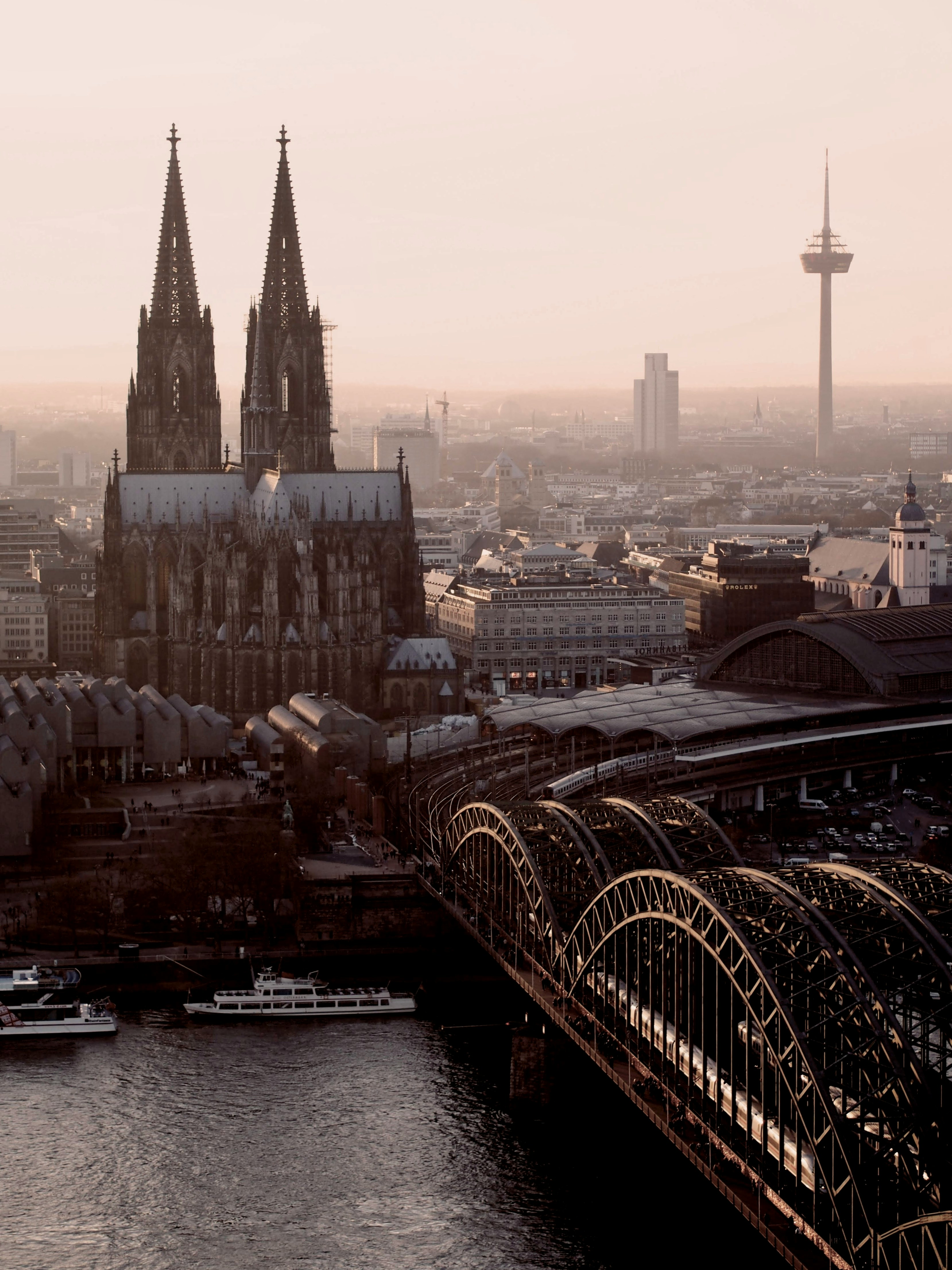
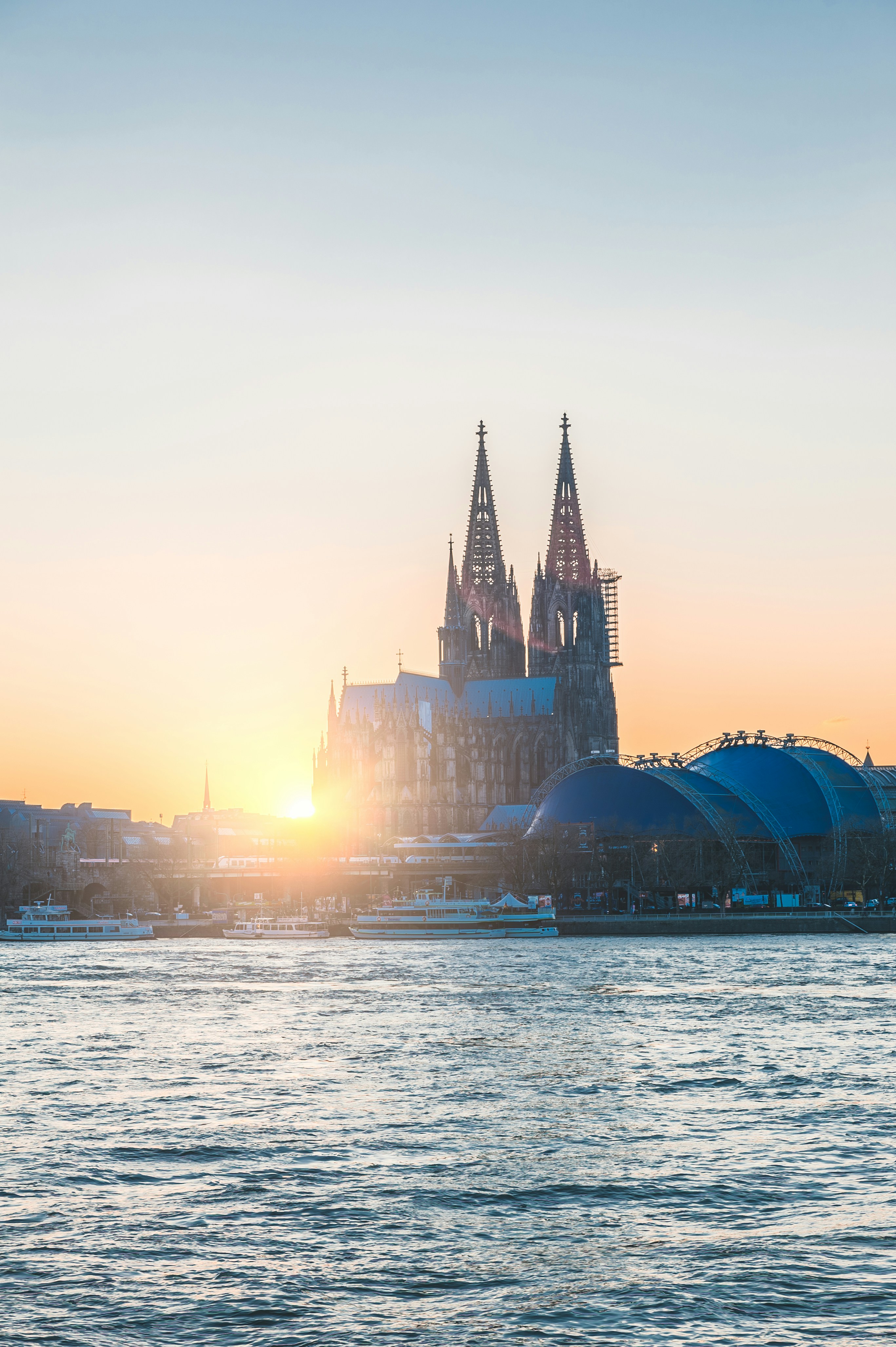
Cologne Cathedral is hard to miss when you arrive at the main station. That is partly the point: its scale reflects Cologne's religious importance and the ambitions of the city that built it.
Construction began in 1248, driven in part by the importance of the relics associated with the Three Kings, which had arrived in Cologne in the 12th century. The project stopped for centuries before work resumed in the 19th century. The cathedral was finally completed in 1880.
Its twin towers reach roughly 157 metres. But the more interesting thing to notice up close is the detail: the sculpted stonework, stained glass, enormous interior and the way a building begun in the Middle Ages was completed in the age of industrialisation.
It is also a UNESCO World Heritage Site. Entry to the main cathedral is generally free, while special areas and activities may have separate admission and opening conditions.
A bridge, thousands of locks and the view back
Right beside Köln Hbf is the Hohenzollernbrücke, one of the city's defining railway bridges. It connects the centre with Deutz on the opposite bank of the Rhine.
Walk across and turn around. The view back towards the cathedral and the old town is one of the clearest ways to understand Cologne's skyline. The bridge is also famous for the countless love locks attached to its railings.
On the Deutz side, the riverfront gives us room to see the cathedral from a distance, rather than standing directly underneath it.
A city rebuilt, not simply preserved
Much of central Cologne was devastated by bombing during the Second World War. The city you see today is a mixture of surviving historic structures, carefully reconstructed landmarks and post-war buildings.
That contrast is part of Cologne's identity. A Roman remnant might stand close to a modern building; a medieval church might be surrounded by streets that were laid out again after the war. The cathedral itself survived heavily damaged but standing amid widespread destruction.
So don't expect a perfectly preserved medieval town. Cologne is a place where different eras are visible side by side.
And Cologne is more than its old town
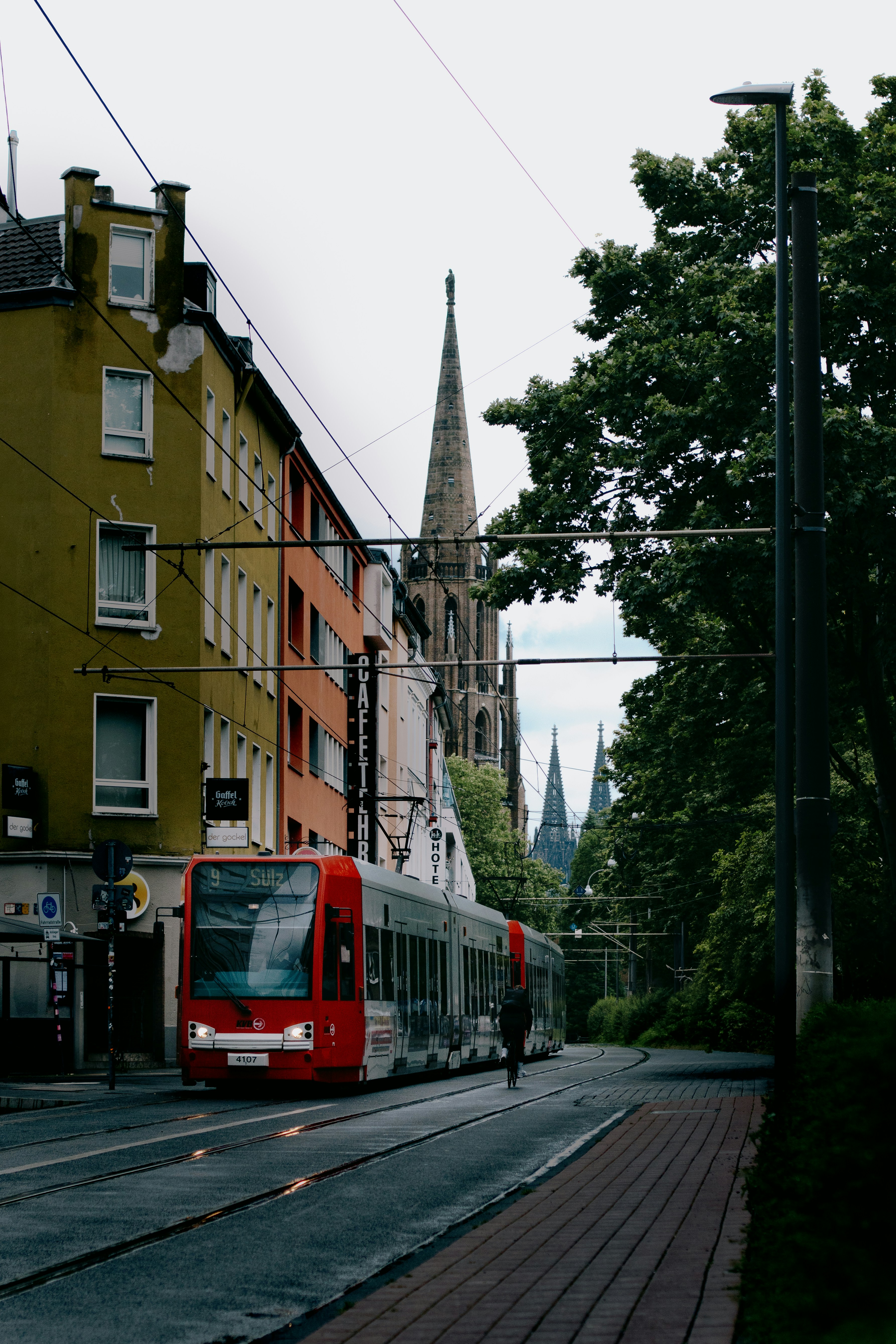
Cologne is also a university city with music, art, nightlife and a strong local culture. Its neighbourhoods can feel very different from the monumental centre around the cathedral.
If you want to wander farther, the Belgisches Viertel is known for its cafés, small shops and creative scene, while Ehrenfeld has a more industrial, street-art and music-oriented character. Both are options for independent exploring, though not necessarily part of our shared walk.
And yes, Kölsch is both the local beer and the name of the city's dialect. Cologne's identity is very much something people continue to live, not only something preserved in museums.
What we can explore together
With our arrival at 15:29, this will be an afternoon-to-evening visit. We'll keep the shared walk centred on places that make sense on foot from Köln Hbf, leaving room for food, cafés and people who want to branch off.
- Cologne Cathedral: our starting landmark, right by the station.
- Old Town: Alter Markt, the lanes around Groß St. Martin and the riverfront.
- Hohenzollern Bridge: cross the Rhine and see the skyline from Deutz.
- Free time: explore independently, get food or choose another part of Cologne.
These are suggested stops, not a timed guided tour. The exact order can change depending on the group and the evening.
Going together from Kamp-Lintfort
We’ll meet at HSRW Kamp-Lintfort at 13:15 and head to Cologne together from there.
Our connection leaves from Neues Rathaus, Kamp-Lintfort, at 13:38 on Sunday, 18 October. Please arrive at the stop a little earlier so we can find each other before departure.
- Departure: 13:38 · Neues Rathaus, Kamp-Lintfort · SB30
- Arrival: 15:29 · Köln Hbf · platform 9, sections D–G (service 28521)
- Cologne meetup: if travelling separately, meet us around the cathedral; the exact spot and time will be shared with the group.
- Return: flexible; no fixed group return has been announced.
Our journey
- 13:38 — Neues Rathaus, Kamp-Lintfort (SB30)
- 15:29 — Arrival at Köln Hbf (platform 9, D–G; service 28521)
The plan
- Travel together from Kamp-Lintfort or make your own way to Cologne.
- Arrive at Köln Hbf at 15:29.
- Explore the cathedral, old town and Rhine together.
- Enjoy time for food, smaller groups and independent discoveries.
- Return independently or coordinate with others later.
Good to know
- No Study & Chill registration or event ticket is needed.
- Bring a valid ticket or pass for the journeys you take; check your own ticket's coverage.
- Museums, cathedral tower visits, food and other paid activities are optional and at your own expense.
- We'll be walking; comfortable shoes and a weather-appropriate layer are useful.
- The arrival time is confirmed from the journey you shared, but schedules may change. Recheck before travelling.
- The return time and meeting point for anyone arriving independently will be communicated separately.
Questions or joining us directly in Cologne? Keep an eye on the Study & Chill group for updates.
Photo Credit
- Photo by Ollie Tulett on Unsplash
- Photo by Ari Shojaei on Unsplash
- Photo by Glenn Carstens-Peters on Unsplash
Go show some LOVE and appreciate the Artist 💟.